best water tank cleaning company in Bangalore
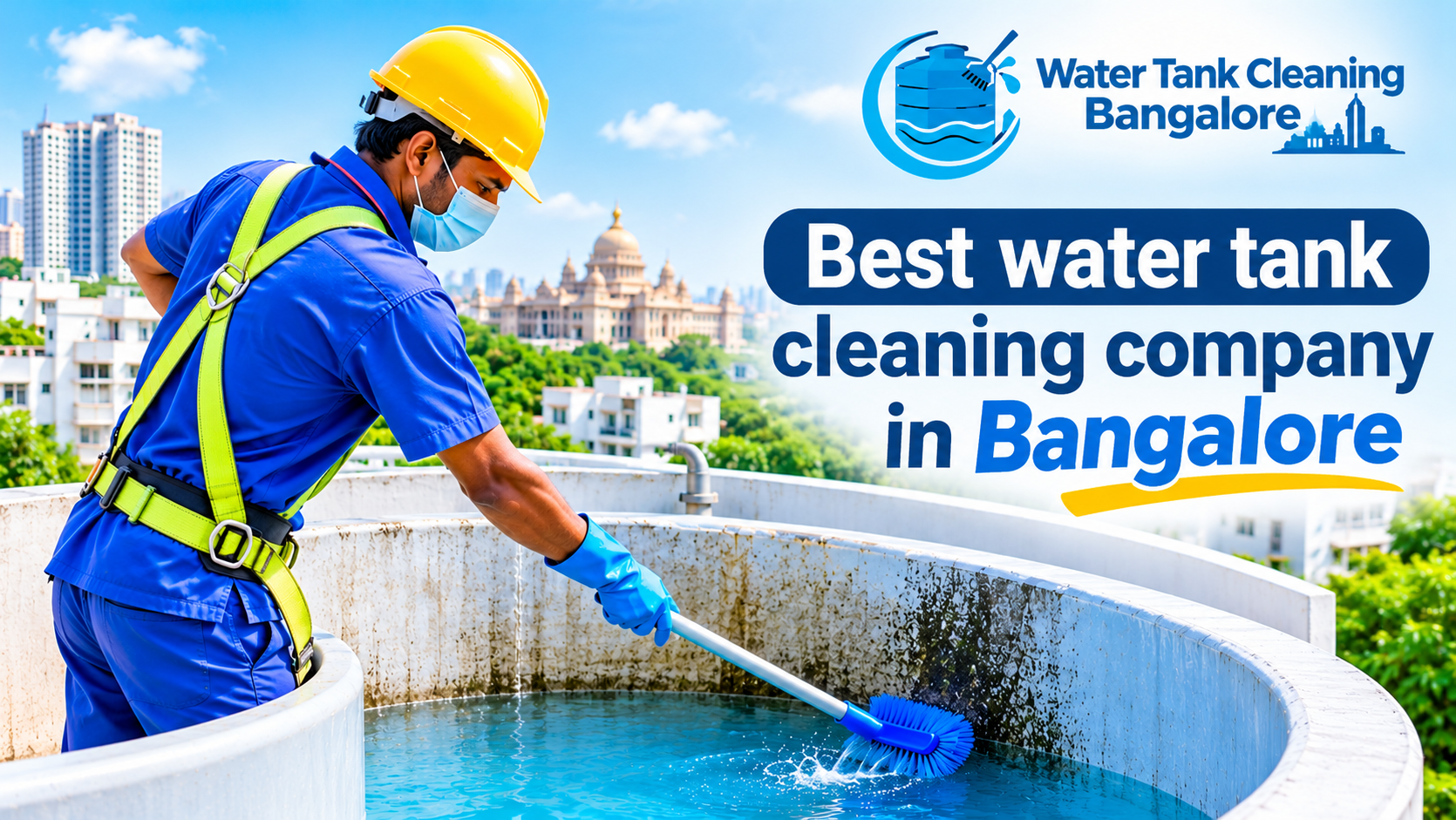
Best Water Tank Cleaning Company in Bangalore: Professional Water Tank Cleaning Services for Homes, Apartments and Businesses
Clean water is essential for everyday life. Whether it is used for drinking, cooking, bathing, washing or other household activities, maintaining good water quality is important for every family. However, receiving water from a reliable supply does not automatically mean that the water stored in your tank remains clean. Over time, water storage tanks can accumulate dust, mud, sand, rust particles, sludge, algae and other unwanted materials. Without regular cleaning, these contaminants can affect the cleanliness of stored water.
This is why choosing the best water tank cleaning company in Bangalore is an important part of maintaining a hygienic home or commercial property. Professional water tank cleaning helps remove accumulated dirt, sediment and deposits from the tank while supporting better water storage hygiene.
Bangalore has a large number of independent houses, residential apartments, gated communities, offices, schools, hospitals, restaurants and commercial buildings. Most of these properties depend on overhead or underground water storage tanks to maintain a regular water supply. As these tanks are used continuously, they require proper inspection, cleaning and maintenance.
At watertankcleaningbangalore.com, our focus is on helping property owners understand the importance of clean water storage and the value of professional tank cleaning. This guide explains how water tanks become contaminated, why regular cleaning matters, how professional cleaning works and what to consider when selecting a water tank cleaning service in Bangalore.
Why Choosing the Best Water Tank Cleaning Company in Bangalore Matters
Water tanks are an essential part of residential and commercial water supply systems. They store water received from municipal connections, borewells, tankers and other sources before distributing it throughout a property.
Although the water entering a storage tank may appear clear, small particles and impurities can gradually settle at the bottom. Dust can enter through poorly fitted covers, while sediments and minerals may accumulate during regular storage. In some cases, stagnant water and favourable environmental conditions can contribute to algae growth or unpleasant odours.
Regular cleaning is necessary to remove these deposits and maintain a hygienic storage environment.
Choosing the best water tank cleaning company in Bangalore is not simply about finding someone who can wash a tank. It is about selecting a service provider that understands different tank structures, follows an organised cleaning process and gives attention to hygiene and safety.
A professional water tank cleaning service can help with:
-
Removing accumulated sludge and sediment.
-
Cleaning dirt and deposits from tank walls and floors.
-
Removing visible algae and other unwanted growth.
-
Washing internal tank surfaces.
-
Supporting appropriate tank disinfection.
-
Identifying visible issues such as damaged covers or cracks.
-
Maintaining cleaner water storage conditions.
The right cleaning approach depends on the tank's size, material, condition, location and level of contamination.
Why Water Tank Cleaning Is Important for Bangalore Homes
Bangalore's residential properties use different types of water storage systems. Independent houses may have one underground sump and an overhead tank, while large apartment complexes may have several tanks serving hundreds of residents.
Water storage tanks are exposed to environmental conditions and regular usage. Even when the water supply is consistent, impurities can enter or settle inside the tank.
Here are some important reasons why regular water tank cleaning should not be ignored.
1. Removal of Accumulated Sludge
Sludge is a mixture of fine soil particles, sand, rust, sediment and other materials that settle at the bottom of a water tank.
Over time, these materials can form a thick layer. If the tank is not cleaned periodically, the deposits may mix with the stored water when the water level changes or when the tank is disturbed.
Professional water tank sludge removal helps clear accumulated deposits and restore cleaner internal surfaces.
2. Prevention of Algae Growth
Algae may develop in water tanks when suitable conditions are present, particularly when sunlight enters through openings, damaged covers or translucent tank surfaces.
Green deposits, slippery surfaces and changes in water appearance may indicate algae growth.
Cleaning helps remove visible algae and organic deposits. Proper tank covers and suitable maintenance practices can also help reduce conditions that encourage further growth.
3. Better Water Storage Hygiene
A water tank is a storage area, not a treatment plant. Even treated or relatively clean incoming water can become contaminated if the storage environment is poorly maintained.
Dust, insects, leaves and other external materials may enter through open or damaged tank covers.
Regular water tank cleaning helps maintain a cleaner storage environment and supports better water hygiene.
4. Reduction of Unpleasant Odours
An unpleasant smell from stored water may be associated with accumulated organic matter, stagnant water, microbial activity or contamination.
Cleaning the tank can help remove visible deposits and possible sources of odour. However, if the smell continues after cleaning, the incoming water supply and plumbing system should also be investigated.
5. Protection of Plumbing Fixtures
Sediment and particles present in stored water may travel through the plumbing network. Depending on their quantity and size, these materials can contribute to blockages, deposits and maintenance issues in taps, showerheads, filters and other fixtures.
Maintaining a clean water storage tank helps reduce the amount of accumulated sediment available to enter the distribution system.
6. Better Maintenance of Residential Properties
Clean water storage is an important part of maintaining residential buildings. Apartments, independent houses and gated communities should include tank cleaning in their regular property maintenance schedules.
A properly maintained tank also makes it easier to identify visible damage, loose covers, leakage and other maintenance concerns.
Common Water Tank Problems Faced by Bangalore Residents
Water quality and storage conditions can differ from one property to another. The type of water supply, tank location, maintenance schedule and surrounding environment all influence the condition of a tank.
Some common problems include the following.
Mud and Sand Accumulation
Borewell water, tanker water and other supply sources may contain suspended particles. Some of these particles settle at the bottom during storage.
When water is used continuously, the deposits may remain undisturbed for long periods. Eventually, they form a layer of sediment that requires manual or specialised removal.
Rust and Mineral Deposits
Metal tanks, old fittings and water supply connections may contribute rust particles to stored water. Mineral deposits can also develop depending on the composition of the incoming water.
These deposits may affect tank surfaces and create visible stains.
Algae and Slippery Tank Walls
When sunlight enters a tank, algae may develop under favourable conditions. This can create green or slippery patches on internal walls and floors.
Cleaning should remove visible growth without damaging the tank's internal surface.
Insects and External Contamination
An improperly closed tank can allow mosquitoes, insects, leaves, dust and other materials to enter.
A damaged lid or uncovered opening can increase the risk of contamination. After cleaning, the tank should be securely covered.
Bad Smell and Discoloured Water
Water that develops an unusual smell, colour or appearance should not be ignored. These changes may result from contamination inside the tank, incoming water quality issues, corrosion or plumbing problems.
Tank cleaning may address deposits inside the storage system, but persistent water quality problems require further investigation.
Types of Water Tanks That Require Professional Cleaning
Different properties use different water storage arrangements. The cleaning method should be selected according to the tank's design, capacity, material and accessibility.
A professional water tank cleaning company in Bangalore should be familiar with the requirements of different tank types.
1. Overhead Water Tank Cleaning
Overhead water tanks are commonly installed on rooftops and elevated structures. They supply water to bathrooms, kitchens, wash areas and other points through gravity or pumping systems.
Because they are exposed to dust, heat and changing environmental conditions, overhead tanks require regular inspection and cleaning.
The cleaning process generally includes:
-
Inspecting the tank and its access opening.
-
Isolating the water supply and arranging safe drainage.
-
Removing settled sludge and sediment.
-
Cleaning internal walls and the tank floor.
-
Washing away loosened deposits.
-
Applying an appropriate disinfection procedure.
-
Refilling the tank when the cleaning process is complete.
The tank cover and inlet openings should also be checked to reduce the entry of external contaminants.
2. Underground Water Tank Cleaning
Underground water tanks, also known as water sumps, are widely used in Bangalore homes, apartments and commercial buildings.
These tanks often store large quantities of water received from tankers, borewells or municipal supply systems.
Since they are located below ground level, they may be more difficult to access and inspect. Their internal condition can also remain unnoticed for long periods.
Underground water tank cleaning generally requires careful sludge removal, internal surface cleaning and appropriate safety precautions.
Particular attention should be given to ventilation, access, electrical equipment, water drainage and the risks associated with confined spaces.
3. Apartment Water Tank Cleaning
Large residential apartment complexes may have multiple underground sumps and overhead tanks.
These systems serve many families and require coordinated maintenance to avoid unnecessary interruptions to the water supply.
Apartment water tank cleaning involves understanding the building's storage arrangement, water distribution system and tank capacity.
A planned cleaning schedule helps apartment associations coordinate maintenance activities and communicate water supply interruptions to residents.
4. Residential Water Tank Cleaning
Independent houses, villas and duplex homes usually have smaller storage systems compared with large commercial buildings.
Even so, these tanks require regular maintenance because the stored water is used for everyday household activities.
Residential water tank cleaning may include cleaning the underground sump, overhead tank or both, depending on the property's arrangement.
5. Commercial Water Tank Cleaning
Offices, shopping complexes, hotels, restaurants, educational institutions and other commercial properties often depend on large storage tanks.
These buildings may experience high daily water consumption and need a reliable maintenance schedule.
Commercial water tank cleaning should be planned to minimise disruption to employees, customers and daily operations.
6. Plastic, Concrete and Metal Water Tank Cleaning
Water tanks are manufactured using different materials, and each type requires suitable cleaning methods.
Plastic tanks: These are common in homes and smaller buildings. Their internal surfaces should be cleaned using methods that avoid scratching or damaging the material.
Concrete tanks: These are frequently used as underground sumps and large-capacity storage systems. Their surfaces may develop deposits, cracks or damaged coatings that need inspection.
Metal tanks: These may develop rust, corrosion or mineral deposits. Cleaning should be appropriate for the tank material and its protective coating.
Using unsuitable tools or harsh chemicals can damage tank surfaces. Therefore, cleaning procedures should be selected carefully.
Professional Water Tank Cleaning Process: Step-by-Step Guide
A systematic cleaning process is important for removing deposits and maintaining a hygienic storage environment.
Although the exact procedure varies according to the tank's size, condition and location, professional cleaning generally involves several stages.
Step 1: Initial Tank Inspection
The cleaning process begins with an inspection of the water tank.
The service team should understand:
-
The type and capacity of the tank.
-
Its location and accessibility.
-
The amount of visible sludge and sediment.
-
The condition of internal surfaces.
-
The presence of algae or other deposits.
-
The condition of the lid, inlet and outlet connections.
This assessment helps determine the appropriate cleaning procedure.
Step 2: Isolating the Water Supply
Before cleaning begins, the water supply and connected equipment should be managed carefully.
The tank should be isolated from incoming water sources, and the property's water usage should be planned.
For apartment complexes and commercial properties, advance communication is important so that residents or staff can prepare for a temporary water supply interruption.
Step 3: Draining the Stored Water
The remaining water is removed using a suitable drainage arrangement or pumping equipment.
The method depends on the tank's structure, available drainage facilities and quantity of stored water.
Proper drainage helps expose the tank floor and makes it easier to remove settled deposits.
Step 4: Sludge and Sediment Removal
Accumulated mud, sand, rust particles and sludge are removed from the tank.
Depending on the tank design and contamination level, appropriate manual tools or specialised equipment may be used.
The objective is to remove settled deposits without damaging the tank's internal surface.
Step 5: Internal Wall and Floor Cleaning
Once the visible sludge has been removed, the tank's internal surfaces are cleaned.
This stage focuses on removing dirt, stains, algae and deposits attached to the walls and floor.
Suitable brushes, cleaning tools or equipment may be used depending on the material and condition of the tank.
Step 6: Washing and Rinsing
The internal surfaces are washed to remove loosened dirt and remaining cleaning residues.
Rinsing is important because accumulated deposits and cleaning materials should not remain inside the tank.
The wash water should be removed through an appropriate drainage arrangement.
Step 7: Tank Disinfection
Cleaning and disinfection are different processes.
Cleaning removes dirt, sediment and visible deposits. Disinfection is intended to reduce harmful microorganisms when performed using a suitable product and procedure.
An appropriate disinfectant should be selected according to the tank, intended water use and applicable guidance.
The required concentration, contact time and rinsing procedure must be followed according to the product instructions and relevant public health recommendations.
Step 8: Final Inspection
Before the tank is returned to normal use, the internal condition should be checked.
The inspection should confirm that visible sludge, dirt and cleaning residues have been removed.
The cover, access opening and other visible components should also be checked.
Step 9: Refilling the Tank
After the cleaning and disinfection process is completed, the tank can be refilled with water.
The system should be returned to service according to the appropriate procedure.
If the water continues to show unusual colour, smell or other signs of contamination, it should be investigated rather than assumed to be safe simply because the tank has been cleaned.
How Often Should You Clean Your Water Tank in Bangalore?
One of the most common questions property owners ask is how frequently water tanks should be cleaned.
There is no single schedule that is suitable for every property. The cleaning frequency depends on the quality of incoming water, tank design, storage conditions, usage and previous maintenance.
As a general maintenance recommendation, many properties plan professional tank cleaning approximately every three to six months. More frequent cleaning may be necessary when contamination is noticed or when the storage system is exposed to additional risks.
Consider the following situations:
Independent Houses
Independent homes should include overhead tank and underground sump cleaning in their routine maintenance schedule.
The cleaning interval should reflect the condition of the incoming water and the amount of sediment accumulating inside the tank.
Apartments and Gated Communities
Apartment associations should maintain a written schedule for all underground and overhead tanks.
Larger buildings may need separate cleaning plans for different storage compartments to manage water availability.
Commercial Buildings
Commercial properties should consider their daily water consumption, occupancy and operational requirements when scheduling cleaning.
Hotels, restaurants, offices and institutions should maintain appropriate records of tank maintenance.
After Water Contamination
If dirt, insects, sewage contamination, flooding or other unwanted materials enter a water tank, cleaning should not be postponed until the next scheduled service.
The source of contamination should be addressed, and appropriate cleaning and disinfection measures should be taken.
Signs That Your Water Tank Needs Immediate Cleaning
Water tanks are often hidden from regular view. As a result, many property owners do not realise that cleaning is necessary until they notice a problem.
The following signs may indicate that your tank needs inspection and cleaning.
1. Muddy or Cloudy Water
If water from your taps appears muddy or cloudy, sediment inside the tank may be one possible reason.
However, the problem may also originate from the incoming supply or plumbing network. The entire system should be checked.
2. Unpleasant Smell
A musty, earthy or unusual smell may indicate accumulated organic deposits or contamination.
The source should be identified before the water is used for drinking or cooking.
3. Visible Dirt in Stored Water
Particles floating in the water or deposits visible near the tank opening are clear reasons to inspect the storage system.
4. Green or Black Deposits
Green patches may indicate algae growth, while dark deposits may be associated with accumulated dirt or other contamination.
A proper inspection can help determine the appropriate cleaning method.
5. Long Period Without Cleaning
If the tank has not been cleaned for a long time, accumulated sediment may be present even when the stored water looks clear.
A scheduled inspection and cleaning service can help assess its condition.
6. Insects or Leaves Inside the Tank
Insects, leaves and other external materials may enter through damaged covers or uncovered openings.
The tank should be cleaned, and the access points should be secured.
Benefits of Hiring a Professional Water Tank Cleaning Company in Bangalore
Water tank cleaning may appear simple, but cleaning a large storage tank requires proper equipment, experience and safety precautions.
Hiring a professional service can make the process more organised and effective.
Proper Sludge Removal
Professional cleaning focuses on removing deposits from the bottom and internal surfaces rather than simply draining and refilling the tank.
Suitable Cleaning Equipment
Different tanks require different tools and cleaning arrangements.
Using suitable equipment helps remove deposits while reducing the risk of damage to the tank.
Better Attention to Hygiene
An organised cleaning process includes cleaning, rinsing and appropriate disinfection rather than relying on a basic water wash.
Reduced Maintenance Difficulties
Periodic cleaning helps property owners identify visible maintenance issues before they become more complicated.
Convenient Service for Large Properties
Apartment complexes, offices and commercial buildings may have several tanks with different capacities.
A professional service can help coordinate the cleaning of multiple tanks according to an agreed schedule.
Time-Saving Maintenance
Cleaning large tanks can be physically demanding and time-consuming.
Professional assistance allows property owners and maintenance teams to manage the work more efficiently.
How to Choose the Best Water Tank Cleaning Company in Bangalore
Several service providers offer water tank cleaning in Bangalore. However, the quality of service, cleaning procedures, equipment and safety practices can vary.
Before selecting a company, consider the following factors.
1. Experience in Different Tank Types
Choose a service provider familiar with overhead tanks, underground sumps, apartment storage systems and commercial water tanks.
Experience with different tank structures helps the service team select suitable cleaning procedures.
2. Clear Cleaning Process
Ask the company to explain what its service includes.
A professional cleaning service should be able to describe sludge removal, internal surface cleaning, washing, rinsing and disinfection where appropriate.
3. Suitable Equipment
The equipment should match the size, material and condition of the tank.
For example, cleaning a large underground concrete sump may require a different arrangement from cleaning a small rooftop plastic tank.
4. Safety Procedures
Safety is particularly important when cleaning underground tanks.
Ask whether the service provider follows appropriate precautions for electrical equipment, ventilation, access, drainage and confined-space hazards.
Workers should not enter confined spaces without suitable assessment, equipment and trained supervision.
5. Transparent Pricing
The service provider should explain the estimated cost and what is included.
The price may depend on tank capacity, location, accessibility, contamination level and number of tanks.
6. Service Coverage
Confirm whether the company serves your particular area of Bangalore.
It is also useful to check whether the provider handles residential, apartment and commercial requirements.
7. Customer Feedback and Reputation
Look for genuine customer reviews and feedback.
Reviews may help you understand the provider's punctuality, communication, service quality and approach to maintenance.
8. Maintenance Guidance
A reliable service provider should be willing to explain basic tank maintenance practices and recommend an appropriate cleaning schedule based on the tank's condition.
Water Tank Cleaning Services in Bangalore for Different Areas
Bangalore has a diverse residential and commercial landscape. From established neighbourhoods to developing residential corridors, properties use a variety of water storage arrangements.
Professional water tank cleaning is important for maintaining these systems.
Water Tank Cleaning in Whitefield
Whitefield has numerous apartments, gated communities, independent houses and commercial establishments.
Many buildings use multiple overhead tanks and underground sumps. Coordinated cleaning is useful for maintaining these storage systems.
Water Tank Cleaning in Electronic City
Electronic City includes residential communities, offices and commercial buildings.
Properties in this area may require residential and commercial tank cleaning based on their water consumption and storage capacity.
Water Tank Cleaning in Sarjapur Road
Sarjapur Road has experienced substantial residential development, including apartment complexes and independent homes.
Regular water tank maintenance is important for properties that depend on overhead and underground storage.
Water Tank Cleaning in Marathahalli
Residential apartments, commercial buildings and independent houses in Marathahalli use different types of water storage systems.
Cleaning schedules should be based on the number of tanks, their condition and the water supply arrangement.
Water Tank Cleaning in HSR Layout
HSR Layout includes residential properties, offices and commercial spaces.
Professional cleaning can help maintain overhead tanks and underground sumps used in these buildings.
Water Tank Cleaning in BTM Layout
BTM Layout has apartments, independent houses, hostels and commercial establishments.
These properties benefit from periodic inspection and cleaning of their water storage tanks.
Water Tank Cleaning in Jayanagar and JP Nagar
Established residential neighbourhoods such as Jayanagar and JP Nagar have independent homes, apartments and commercial properties.
Older storage systems may require additional attention to internal deposits, fittings and visible surface damage.
Water Tank Cleaning in Hebbal and Yelahanka
These areas include residential communities, apartment complexes and commercial properties.
The cleaning requirements may differ depending on the tank's location, construction and water source.
A service request should include the property location, tank type and approximate capacity to help determine the appropriate cleaning arrangement.
Residential Water Tank Cleaning vs Commercial Water Tank Cleaning
Residential and commercial tanks serve different purposes and often require different maintenance arrangements.
Residential Water Tank Cleaning
Residential cleaning is generally carried out in individual houses, villas, duplex homes and smaller apartment buildings.
The main objectives include:
-
Removing accumulated dirt and sediment.
-
Cleaning overhead tanks and underground sumps.
-
Maintaining hygienic household water storage.
-
Identifying visible tank damage.
-
Supporting a suitable cleaning schedule.
The cleaning process should be planned to minimise inconvenience to the household.
Commercial Water Tank Cleaning
Commercial properties may have larger storage systems and higher daily water requirements.
Cleaning may need to be coordinated around operating hours, staff availability and building maintenance schedules.
The work may involve:
-
Cleaning large-capacity water sumps.
-
Maintaining multiple overhead tanks.
-
Coordinating access and water supply interruptions.
-
Following suitable safety procedures.
-
Recording maintenance activities.
-
Planning periodic inspections.
Both residential and commercial properties benefit from a systematic approach to water tank maintenance.
Understanding Water Tank Cleaning Cost in Bangalore
The cost of water tank cleaning in Bangalore can vary significantly depending on the property and the condition of the tank.
There is no fixed price that applies to every water tank because cleaning requirements differ from one site to another.
Some of the major factors that influence the cost include the following.
Tank Capacity
The capacity of the tank is one of the primary pricing factors.
A small household tank generally requires less cleaning effort than a large underground sump serving an apartment complex.
Tank Type and Material
Plastic, concrete and metal tanks may require different tools and cleaning arrangements.
The location and design of the tank can also influence the service cost.
Level of Dirt and Sludge
A tank with a small amount of sediment may require less work than one containing thick sludge, algae or heavily attached deposits.
Accessibility
Rooftop tanks, underground sumps and tanks located in restricted areas may require different access arrangements.
Number of Tanks
Cleaning several tanks in one property may involve different planning and labour requirements compared with a single-tank service.
Additional Cleaning Requirements
The cost may also depend on whether the service includes additional work such as disinfection, difficult sludge removal or special equipment arrangements.
How to Get an Accurate Estimate
Before requesting a quotation, provide the service provider with:
-
Your property location in Bangalore.
-
The type of tank.
-
The approximate tank capacity.
-
The number of tanks requiring cleaning.
-
Information about visible sludge or contamination.
-
Details about tank accessibility.
Providing accurate information helps the company assess the cleaning requirements and offer a more suitable estimate.
Common Mistakes to Avoid During Water Tank Maintenance
Water tank maintenance involves more than occasional washing. Some common mistakes can reduce cleaning effectiveness or allow contamination to return.
Cleaning Only When Water Looks Dirty
Water may appear clear even when sediment has accumulated at the bottom of the tank.
Do not depend only on visible changes in water quality to decide when cleaning is necessary.
Ignoring the Underground Sump
Many property owners focus on overhead tanks while forgetting about underground storage systems.
Both tanks should be included in the maintenance schedule.
Using Household Cleaning Products Without Guidance
Strong detergents, unsuitable chemicals and excessive disinfectants can leave unwanted residues.
Only suitable products should be used according to the manufacturer's instructions and applicable water safety guidance.
Ignoring Tank Covers
A clean tank can become contaminated again if its cover is broken, loose or missing.
Ensure that access openings are properly secured after maintenance.
Neglecting Plumbing Connections
Inlet pipes, outlet connections, overflow arrangements and surrounding plumbing should also be inspected for visible problems.
Allowing Untrained Entry Into Underground Tanks
Underground water tanks can present serious confined-space hazards, including oxygen deficiency and exposure to harmful gases.
Never allow untrained workers to enter such spaces without proper assessment, monitoring, equipment and safety procedures.
DIY Water Tank Cleaning vs Professional Tank Cleaning
Some homeowners consider cleaning their water tanks themselves. While basic external maintenance can be handled by property owners, internal cleaning may require professional assistance.
DIY Water Tank Cleaning
For small, accessible tanks, homeowners may be able to perform limited maintenance when it is safe to do so.
However, DIY cleaning can present difficulties when the tank contains thick sludge, algae or heavy deposits.
There may also be risks associated with slippery surfaces, electrical equipment, chemicals and confined spaces.
Professional Water Tank Cleaning
Professional services are generally more suitable for:
-
Large overhead water tanks.
-
Underground concrete sumps.
-
Apartment water storage systems.
-
Commercial water tanks.
-
Tanks with heavy sludge accumulation.
-
Tanks requiring specialised cleaning equipment.
A trained team can assess the tank and select a suitable procedure.
For underground tanks, entry should only take place under appropriate confined-space safety controls. Professional assistance does not remove the need for these precautions.
Important Safety Considerations During Water Tank Cleaning
Water tank cleaning involves several safety considerations that should never be overlooked.
Electrical Safety
Pumps, cables and other electrical equipment should be inspected and used appropriately around water.
Electrical connections must be protected from moisture, and equipment should be isolated when required.
Confined-Space Safety
Underground tanks may have restricted entry and exit points, limited ventilation and potentially dangerous atmospheric conditions.
They should be treated as confined spaces where applicable.
Before entry, appropriate risk assessment, atmospheric testing, ventilation, isolation and rescue arrangements are essential.
Chemical Handling
Cleaning and disinfection products should be handled according to their labels and safety instructions.
Different chemicals should never be mixed without verified compatibility. In particular, mixing chlorine-based products with acids or ammonia can release dangerous gases.
Safe Wastewater Disposal
Sludge, dirty water and cleaning residues should be removed and disposed of responsibly.
Wastewater should not be discharged in a way that creates a public hygiene or environmental problem.
Protection of Tank Surfaces
Cleaning tools and methods should be suitable for the tank material.
Aggressive scrubbing or unsuitable chemicals may damage internal coatings and create additional maintenance problems.
How to Maintain Your Water Tank After Professional Cleaning
Cleaning is only one part of maintaining a hygienic water storage system. Regular attention can help prevent contamination from returning quickly.
Here are some useful maintenance practices.
Keep the Tank Properly Covered
Ensure that the tank has a secure cover.
This helps prevent dust, insects, leaves and other unwanted materials from entering.
Inspect the Tank Periodically
Check visible tank openings, covers, pipes and surrounding surfaces for damage.
Any leakage, cracks or loose fittings should be addressed.
Monitor Water Appearance and Smell
Pay attention to unusual changes in the water.
Cloudiness, discolouration and unpleasant odours should be investigated rather than ignored.
Maintain a Cleaning Record
For apartments and commercial properties, maintain a record of cleaning dates, tank capacities and service details.
This makes it easier to plan future maintenance.
Check the Incoming Water Supply
If water repeatedly becomes dirty after cleaning, the source of contamination may be outside the tank.
Inspect the incoming supply, pipes and other connected components.
Prevent Unauthorised Access
Keep tank openings and access points secured to prevent accidental entry or contamination.
Plan Periodic Cleaning
Do not wait until a visible problem develops.
A planned maintenance schedule helps property owners manage cleaning in a timely manner.
Why Regular Water Tank Cleaning Is Important for Apartments and Housing Societies
Apartment buildings often depend on a centralised water storage system. A single underground sump may supply multiple overhead tanks, which then distribute water to individual apartments.
Because many households depend on the same storage infrastructure, maintenance should be properly organised.
Apartment associations should consider the following practices:
-
Maintain an inventory of all water storage tanks.
-
Record the capacity and location of each tank.
-
Prepare a periodic cleaning schedule.
-
Inform residents before scheduled maintenance.
-
Plan water supply interruptions in advance.
-
Ensure suitable cleaning and disinfection procedures.
-
Check tank covers, access points and visible fittings.
-
Maintain service records for future reference.
A structured maintenance plan helps building managers coordinate tank cleaning without unnecessary disruption.
For large residential communities, cleaning should be planned in stages where the storage system allows it. This can help manage water availability during maintenance.
How Clean Water Storage Supports Better Household Hygiene
Water is used throughout the day for cooking, washing vegetables, bathing, brushing teeth and cleaning household surfaces.
The condition of the storage system is therefore an important part of overall household hygiene.
A clean water tank does not automatically guarantee that water is safe to drink. Water safety also depends on the source, treatment, distribution system and possible contamination after cleaning.
However, maintaining clean internal tank surfaces and properly secured covers helps reduce avoidable contamination within the storage system.
If water is intended for drinking, its quality should be assessed through appropriate testing whenever there are concerns about its safety.
Frequently Asked Questions About Water Tank Cleaning in Bangalore
1. Which is the best water tank cleaning company in Bangalore?
The best water tank cleaning company is one that follows a systematic cleaning process, uses suitable equipment, understands different tank types and follows appropriate safety procedures. Before selecting a provider, check its service coverage, cleaning methods, customer feedback and pricing transparency.
2. How often should a water tank be cleaned in Bangalore?
As a general maintenance guideline, many residential and commercial properties schedule water tank cleaning every three to six months. However, the ideal frequency depends on the water source, tank condition, storage environment and level of contamination.
3. What is included in professional water tank cleaning?
Professional cleaning generally includes initial inspection, draining, sludge removal, internal wall and floor cleaning, washing, rinsing and appropriate disinfection where required. The exact service may vary depending on the tank and its condition.
4. Is overhead water tank cleaning necessary?
Yes. Overhead tanks can accumulate dust, sediment, algae and other deposits. Regular inspection and cleaning help maintain a hygienic storage environment.
5. Do underground water tanks require cleaning?
Yes. Underground tanks and sumps can collect mud, sand, sludge and other deposits over time. They should be included in the property's regular water tank maintenance schedule.
6. Can water tank cleaning remove bad smells?
Cleaning can help remove accumulated organic deposits and other visible sources of unpleasant odour. If the smell continues, the incoming water supply and plumbing system should also be investigated.
7. How much does water tank cleaning cost in Bangalore?
The price depends on tank capacity, tank type, accessibility, contamination level and the number of tanks. Contact a service provider with these details to obtain an accurate quotation.
8. Can a plastic water tank be cleaned professionally?
Yes. Plastic tanks can be cleaned using suitable tools and methods that help remove deposits without damaging their internal surfaces.
9. Is disinfection included in water tank cleaning?
Disinfection may be included depending on the service arrangement. It is important to confirm that the method and product are appropriate for the intended water use and are applied according to the manufacturer's instructions.
10. How long does water tank cleaning take?
The time required depends on tank capacity, accessibility, the amount of accumulated sludge and the cleaning procedure. Smaller tanks may take less time, while large underground sumps and multiple-tank systems require more planning.
11. Should I empty the tank before cleaning?
In most professional cleaning procedures, stored water is drained or removed to allow access to the internal surfaces and settled deposits. The exact procedure depends on the tank design and service requirements.
12. Is water tank cleaning necessary for newly constructed buildings?
Yes. New tanks should be inspected and appropriately cleaned before being placed into service. Construction dust, debris and other materials may remain inside storage systems after installation.
13. Can water tank cleaning remove all water contamination?
No. Tank cleaning addresses contamination within the storage tank, but it cannot correct every water quality issue. Contamination may also originate from the source, pipelines or other parts of the distribution system. Water testing may be necessary.
14. Do apartment associations need regular water tank cleaning?
Yes. Apartment associations should maintain a s